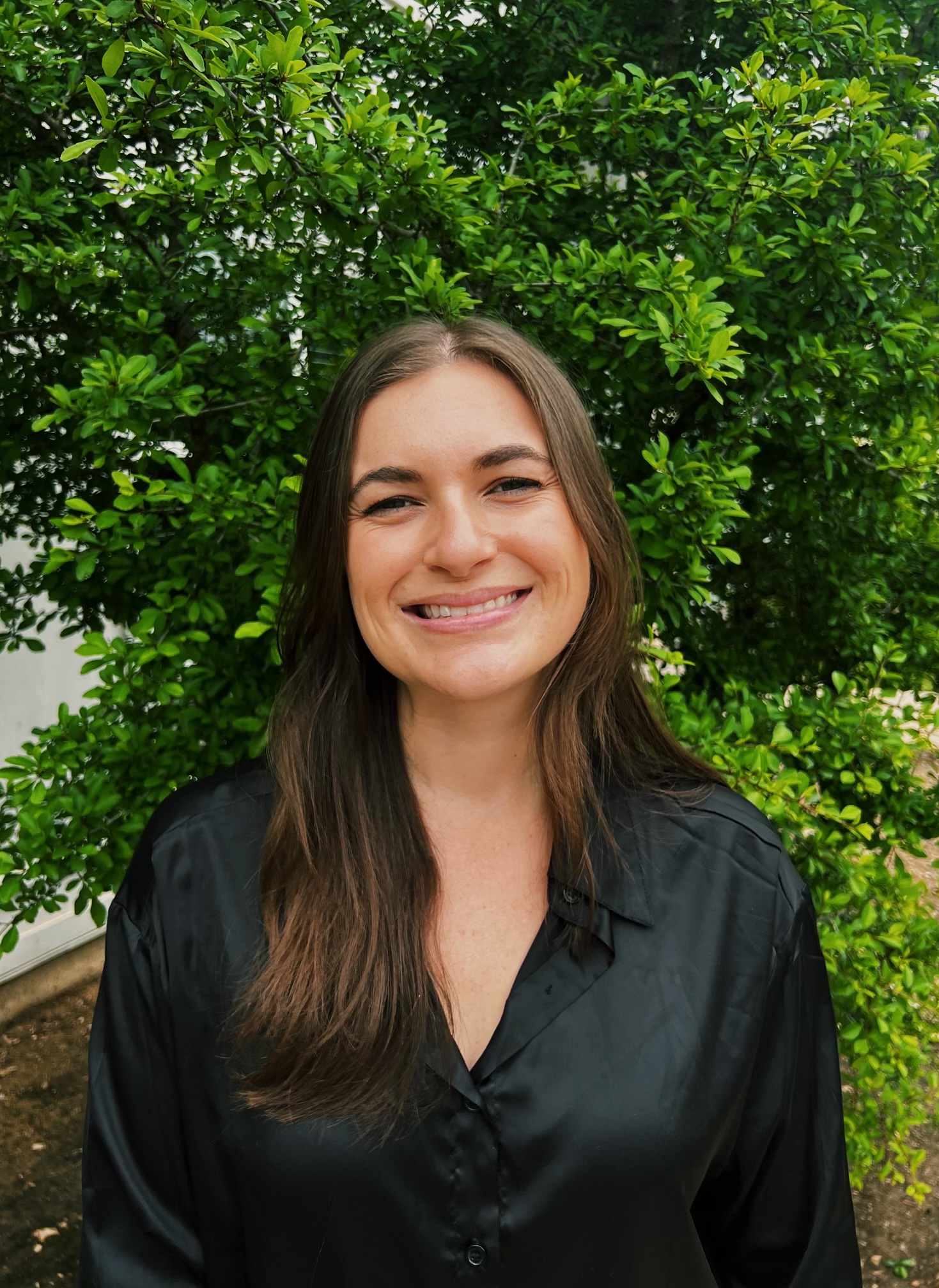
Brittany Tyrrell, LCSW (She/Her)
Licensed Clinical Social Worker at Austin Mindfulness Center in Austin, Texas.
A Massachusetts transplant who loves family, reading, baking, traveling, and the outdoors.
Support for Teens/Young Adults, Anxiety, Trauma/EMDR
A person who never made a mistake never tried anything new. — Albert Einstein
Meet with Brittany
- Online appointments.
- Ages 15–40: Adults (26–64), Teens (13–17), and Young Adults (18–25)
- Languages: English.
Payment options: Aetna, Blue Cross Blue Shield, Carelon, Cigna, EHN, Optum, Oscar, Oxford, Private Pay / Self Pay, Sana, and United Healthcare.
Availability and insurance coverage are confirmed before scheduling.
Professional profile
Brittany is a Licensed Clinical Social Worker (LCSW) in Texas and a Licensed Independent Social Worker–Clinical Practice (LISW-CP) in South Carolina. She earned her Masters of Social Work from Boston College in 2020 and her bachelor’s degree in Psychology from Boston University.
Brittany has experience providing therapy in outpatient, school, and residential treatment settings, working with adolescents and young adults. She is passionate about helping adolescents and young adults manage anxiety, overcome perfectionism, build confidence, navigate relationships, and adjust to school or career changes.
Brittany enjoys working with clients navigating anxiety, perfectionism, self-esteem, relationship challenges, attachment concerns, depression, and trauma. She also has extensive experience supporting clients experiencing suicidal thoughts, self-injurious behaviors, family conflict, and the lasting effects of trauma.
Brittany is certified in Eye Movement Desensitization and Reprocessing (EMDR), an evidence-based therapy that can be especially effective for individuals healing from trauma. She also incorporates Cognitive Behavioral Therapy (CBT) and Dialectical Behavior Therapy (DBT) into her work, tailoring treatment to each client’s unique needs and goals.
Originally from Massachusetts, Brittany enjoys spending time with family and friends, reading, baking, traveling, and spending time outdoors.
Brittany strives to create a warm, collaborative, and nonjudgmental space where clients feel safe to explore challenges, build insight, and create meaningful change. Whether a client is navigating adolescence, transitioning into adulthood, or facing life’s inevitable changes, Brittany enjoys helping them build confidence, strengthen relationships, and develop the skills to move forward.
Welcome
Hello! I am happy you are here to start exploring getting help for yourself. The biggest step is deciding you need help and asking for it, so good job taking this leap! My goal is to create a safe and comfortable environment to help you achieve your goals, whether that is working through a stressful time, or building skills to be less stressed and more confident. I hope to work with you to lead a healthier life and feel more fulfilled.
How I work
Starting therapy can be intimidating. I like to start with making sure you feel safe and comfortable in the environment. Next, I want to go over your goals of starting therapy to ensure we are on the same page. Therapy is not one-size-fits-all, therefore, one approach does not work for everyone. I use a combination on Cognitive Behavioral Therapy (CBT), Dialectal Behavioral Therapy (DBT), Motivational Interviewing, Eye Movement Desensitization Reprocessing (EMDR), and coping skills and mindfulness. I emphasize a strength-based approach to build on the skills you already have and will gently push you to see yourself in a brighter light.
What Brittany helps with
- Abandonment
- ADHD
- Adoption / Foster Care
- Anger
- Anxiety
- Attachment Concerns
- Body Image
- Borderline Personality Disorder (BPD)
- Codependency
- Depression
- Grief and Loss
- LGBTQ+ Concerns
- Life Transitions
- Mood Disorders
- Panic Disorder
- Perfectionism
- Post-IOP / Post-Hospitalization Care
- PTSD
- Relationship Concerns
- Self-Esteem
- Self-Harm
- Sexual Trauma
- Sleep Difficulties
- Stress
- Suicidal Ideation
- Trauma
How Brittany works
- Behavior Modification
- Cognitive Behavioral Therapy (CBT)
- Dialectical Behavior Therapy (DBT)
- EMDR
- Mindfulness
Therapist spotlight
What made you decide to become a counselor?
I’ve always been drawn to understanding people—why we think, feel, and behave the way we do—and to being someone others feel comfortable talking to. I began my career working in schools, where I especially loved supporting adolescents who needed a safe person in their corner. That experience ultimately led me to social work and therapy, where I could help people not only cope with what they were experiencing, but better understand themselves, their relationships, and the patterns that shape their lives.
If you could teach the world one skill or technique to improve their lives, what would it be?
I would teach people how to become more comfortable with uncomfortable emotions. We spend so much energy trying to get rid of anxiety, sadness, anger, uncertainty, or discomfort, when those emotions are an inevitable part of being human. Learning how to understand what you’re feeling, tolerate it without immediately reacting to it, and trust that it will pass can make such a difference in how you navigate life.
If you could recommend one book to all your clients, what would it be?
Probably Theo of Golden by Allen Levi. It isn’t a therapy book, but I love the way it explores human connection, kindness, and what can happen when people feel genuinely seen and cared for. I’m a big reader, and I think some of the best books for understanding ourselves and other people aren’t necessarily psychology books.
How do you personally practice self-care?
For me, self-care is usually pretty simple: spending time with the people I love, reading, baking or cooking, traveling, getting outside, and making time to slow down. I also think self-care sometimes looks less like doing something relaxing and more like noticing what I need, setting boundaries, or giving myself permission not to be productive all the time.
Have you personally been in counseling and if so, what did you learn about yourself?
Yes! I think experiencing therapy from the other side of the room has made me a better therapist. Counseling has helped me develop more self-awareness, recognize my own patterns, and learn to approach myself with more acceptance and compassion. It has also reinforced for me how valuable it can be to have a space that is entirely your own, where you can be honest, reflect, and work through things without judgment.
What inspires you to help others?
One of my favorite parts of being a therapist is watching someone begin to understand themselves differently. There is something so meaningful about seeing a client recognize a pattern, become kinder toward themselves, set a boundary they were afraid to set, or realize they can handle something that once felt overwhelming. I love getting to be part of that process.
Who is your ideal client?
I especially enjoy working with adolescents and young adults who may look like they have everything together on the outside but feel anxious, overwhelmed, self-critical, or unsure of themselves underneath. My ideal client doesn’t need to have everything figured out or even know exactly what they want to change—they just need to be willing to get curious about themselves. I love helping clients better understand their patterns, build confidence, strengthen their relationships, and feel more comfortable being themselves.
How do you relate to Mindfulness? How do you incorporate it in your sessions?
I think of mindfulness less as “clearing your mind” and more as learning to notice what is happening without immediately judging it or trying to change it. In therapy, that might mean noticing a thought without automatically believing it, recognizing where anxiety shows up in your body, or slowing down enough to identify what you’re actually feeling. I incorporate mindfulness in practical ways that fit the individual client rather than expecting everyone to sit quietly and meditate.
If you are hosting a dinner party, who are the 3 people you would invite and why?
I’d invite three of my closest friends who live far away and have a long dinner, good food, and plenty of time to catch up with people I don’t get to see nearly enough. Staying connected to the people I love is really important to me.