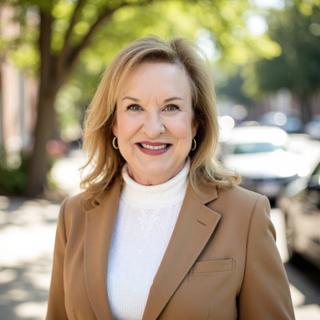
Pamela Lambert, LCSW-S
Therapist at Austin Mindfulness Center in Austin, Texas.
I recharge with a good book and a latte, and a casual hike when the Texas heat allows.
Support for Trauma, Anxiety, Burnout & ADHD
The curious paradox is that when I accept myself just as I am, then I can change. Carl Rogers
Meet with Pamela
- Online appointments.
- Ages 13 and up: Teens, Young Adults, and Adults
- Languages: English.
Availability and insurance coverage are confirmed before scheduling.
Pamela's focus
- ADHD
- Anxiety
- Attachment Concerns
- Complex Trauma
- Family Conflict
- Grief and Loss
- Intergenerational Trauma
- Life Transitions
- Spiritual Growth
- Stress
- Trauma
Professional profile
Pam is a Licensed Clinical Social Worker (2024) with a Master of Social Work from Stephen F. Austin State University and a Bachelor of Social Work from the University of Houston–Downtown. Before becoming a clinician, she spent two decades in nonprofit program development. Her clinical experience spans community mental health, child welfare, juvenile justice, schools, inpatient psychiatry, and intensive outpatient care, including serving as a clinical director. That range means she has sat with people at nearly every point of crisis and recovery, and she brings that steadiness into the room. She is a certified TBRI Practitioner and trained in TF-CBT.
Outside of work, Pam is a gran to six grandchildren. She hikes, belongs to a book club, trains in her garage gym, and is an unapologetic podcast junkie and lifelong learner, usually deep in whatever her ADHD brain has latched onto most recently.
Welcome
Maybe you feel like you’re drowning and can’t keep up. Maybe anxiety is keeping you awake, or you keep landing in the same patterns, the same argument, the same stuck place, and you can’t see the way out. Sometimes you just need an outside perspective from someone who doesn’t already know you.
I believe people change when three things happen. They feel seen and safe enough to experience life as it actually is. They come to understand themselves more clearly. And they practice making new choices. My job is to help create all three.
I came to clinical work after a first career in nonprofit program development. I’ve also done my own work through trauma, grief, and the ordinary ups and downs of a life. As a neurodivergent person with ADHD, I know firsthand that not every brain is wired for the standard mold.
I also work with teens and with parents who feel like they’re walking on eggshells at home and have run out of ideas. If any of this sounds familiar, I’d love to meet you.
How I work
Therapy with me is collaborative and unhurried. You bring what matters most. I listen closely, ask questions that help you see your situation more clearly, and help you pull the threads together. We explore gently, then make sense of what we find.
I draw on Acceptance and Commitment Therapy, DBT skills, and somatic-informed approaches. With parents of adolescents, I use principles from Trust-Based Relational Intervention (TBRI) to rebuild connection and calm conflict at home.
Mindfulness shows up in practical ways. If we’re stuck in our heads, I may pause and ask where you notice it in your body. If you’re overwhelmed or shutting down, we’ll ground together. If anxiety is running high, we might breathe or walk.
Our first session is mostly listening: what brought you here and what’s been hard. Toward the end, we’ll look ahead at what your life could look like once therapy has done its job, and begin shaping goals from there.
What Pamela helps with
- ADHD
- Anxiety
- Attachment Concerns
- Complex Trauma
- Family Conflict
- Grief and Loss
- Intergenerational Trauma
- Life Transitions
- Spiritual Growth
- Stress
- Trauma
- Abandonment
- Adoption / Foster Care
- Alternative Spirituality
- Anger
- Boundaries
- Career Direction
- Codependency
- Depression
- Divorce / Separation
- Domestic Violence Survivor Support
- Identity Exploration
- Meaning & Purpose
- Midlife Transitions
- Neurodivergence
- Panic Disorder
- Parenting
- People-Pleasing
- Perfectionism
- Post-IOP / Post-Hospitalization Care
- PTSD
- Relationship Concerns
- Self-Esteem
- Self-Harm
- Sexual Trauma
- Substance Use
- Suicidal Ideation
- Work-Life Balance
- Aging & Later-Life Adjustment
- Alternative Lifestyle Concerns
- Autism
- Borderline Personality Disorder (BPD)
- Caregiving Stress
- Christian Spirituality
- Chronic Pain / Health Adjustment
- Giftedness
- Infidelity / Betrayal
- LGBTQ+ Concerns
- Oppositional Defiant Disorder (ODD)
- Personality Disorders
- Phobias
- Sleep Difficulties
Who Pamela works with
- Neurodivergent Individuals
- Spiritually Exploring Individuals
- Young Professionals
- Adoptive & Foster Families
- Latino / Hispanic Communities
- Parents & New Parents
- Artists & Creatives
- Bicultural / Multicultural Individuals
- BIPOC Communities
- Caregivers
- Christians
- Chronic Pain / Chronic Illness
- College Students
- First Responders
- Gifted Adults
- Identity-Exploring Clients
- Intercultural Families
- Intergenerational Families
- LGBTQ+ Individuals
- Military Members & Veterans
- Non-Monogamous / Polyamorous
How Pamela works
- Acceptance and Commitment Therapy (ACT)
- Mindfulness-Based Cognitive Therapy (MBCT)
- Polyvagal-Informed
- Cognitive Behavioral Therapy (CBT)
- Integrative Approach
- Mindfulness
- Motivational Interviewing (MI)
- Person-Centered
- Strengths-Based Approach
- Trauma-Focused CBT (TF-CBT)
- Bibliotherapy
- Compassion Focused Therapy (CFT)
- Dialectical Behavior Therapy (DBT)
- Dreamwork & Symbolic Exploration
- Psychodynamic
- Solution-Focused Brief Therapy
- Somatic Mindfulness
- Somatic Therapy
Therapist spotlight
What made you decide to become a counselor?
Long before I went back to school, I came to a deep recognition: behavior communicates. Our experiences shape us, and there are often painful reasons behind the patterns that get labeled as problems. Once I saw that, I couldn’t unsee it. I became a counselor because I want people to know they aren’t broken. What they’re doing made sense at some point, and there is light at the end of the tunnel.
If you could teach the world one skill or technique to improve their lives, what would it be?
Noticing what’s happening in your body before your mind writes the story about it. So much of our suffering comes from reacting to a tight chest or a racing heart as if it’s a verdict on our lives. When we learn to pause and say, “Oh, that’s my nervous system doing its job,” we get a little space. And in that space, we get to choose what comes next.
If you could recommend one book to all your clients, what would it be?
What Happened to You? by Bruce Perry and Oprah Winfrey. It reframes the question so many of my clients carry, “What’s wrong with me?”, into something kinder and more accurate. Dr. Perry explains in plain language how our earliest experiences shape the brain and the nervous system, and why our reactions make sense once we understand where they came from. It’s hopeful, too. The same brain that adapted to hard things can keep changing.
How do you personally practice self-care?
For me, self-care is less about bubble baths and more about paying attention to what my nervous system is telling me. I protect my sleep, move my body in my garage gym, and get outside whenever I can. I refill my curiosity with podcasts and my book club, and I make time for my grandchildren, who are the best reminder to be present. I also stay in my own therapy, because I believe the people who hold space for others need a space of their own.
Have you personally been in counseling and if so, what did you learn about yourself?
Yes, and I still am. I’ve learned that the patterns I once thought were character flaws were often adaptations that made sense at the time. I’ve learned that healing isn’t linear. And I’ve learned that being truly heard by another person changes something that insight alone can’t. Sitting in the client’s chair keeps me humble and reminds me how much courage it takes to show up.
What inspires you to help others?
The moment when someone realizes their reactions make sense. When a client stops asking “What’s wrong with me?” and starts asking “What happened to me, and what do I need now?”, their whole posture changes. I’ve done my own work through trauma and grief, and I know how much it matters to have someone walk alongside you. Getting to be that person for someone else is a privilege I don’t take lightly.
Who is your ideal client?
My ideal client is someone who’s tired of feeling stuck and ready to get curious about why. Maybe you’re carrying old family patterns, running on empty at a job that’s wearing you down, grieving something that changed your life or rethinking the faith you grew up with. Maybe you’ve started to wonder whether your brain is wired a little differently. I especially value working with people walking roads I’ve walked myself: trauma, grief, career reinvention, and coming to understand neurodivergence. I also love working with teens and the parents who are trying to reach them. You don’t need to have the words yet. We’ll find them together.
How do you relate to Mindfulness? How do you incorporate it in your sessions?
Mindfulness shows up in practical ways. If we’re stuck in our heads, I may pause and ask where you notice it in your body. If you’re overwhelmed or shutting down, we’ll ground together. If anxiety is running high, we might breathe or step outside. For clients who are interested, I also offer walk-and-talk sessions. Moving side by side, outdoors, can make hard conversations feel more manageable, especially when sitting face-to-face feels like too much.
If you are hosting a dinner party, who are the 3 people you would invite and why?
First, my friend Jennifer. I’ve watched her build a salon business, then reinvent herself through Enneagram and dream work, first as a participant and then as a coach. She sets and meets physical goals alongside her husband, and she never stops growing or giving back. Second, Sarah J. Maas, because of the way she brings characters to life, both human and fantastical, and keeps you turning pages. Third, Ann Richards. Long before she became governor, she got sober and talked about it openly at a time when almost no public figure did. She rebuilt her life in her fifties and never lost her wit along the way. I’d love to hear how she did it. I suspect it would be a loud, funny, and very honest evening.